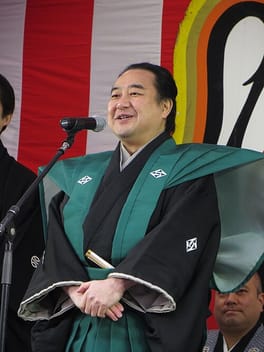
Photo: Ogiyoshisan / CC BY-SA 4.0 (source: Wikimedia Commons)
Nakamura Ganjiro IV was born on February 6, 1959 in Kyoto Prefecture, Japan. Nakamura Ganjiro IV is credited as a kabuki actor. That works out to 67 years old in 2026. Education on record includes Keio University. Listed accolades include Medal with Purple Ribbon.
My Take
What strikes me first about Nakamura Ganjiro IV is the number in his name. In kabuki a stage name is inherited property: you don't invent an identity, you are entrusted with one that earlier generations built, and you are measured against every actor who carried it. That is a strange and heavy way to live as a performer. He was born in Kyoto in 1959 and studied at Keio University, so he had exits available; he chose the stage anyway, inside the Kamigata tradition his family belongs to. His Medal with Purple Ribbon is not the sort of honor you win with one breakout hit either. It goes to people who have stood in the same place doing exacting work for decades. He is not a tabloid figure, and I suspect that is the point. His job is to keep the name intact until it is time to hand it on, which is quiet, unglamorous, and much harder than it looks.
This take was written by generative AI, one per person, from publicly reported facts (editorial policy). It is a reading of the record, not reporting.
1. Profile
- Name (English)
- Nakamura Ganjiro IV
- Name (Japanese)
- 四代目 中村鴈治郎
- Reading
- なかむら がんじろう
- Born
- February 6, 1959 (age 67)
- Origin
- Kyoto Prefecture, Japan
- Occupation
- kabuki actor
- Zodiac / Chinese zodiac
- Aquarius / Boar
2. Background
- University
- Keio University
Awards & achievements
- Medal with Purple Ribbon
3. Links
4. About this entry
Tags
- Last updated
Facts are limited to publicly available information up to 2024; non-public or unconfirmed items are omitted. English text is machine-assisted (facts translated by Sonnet, "My Take" written by Opus 4.8). The Japanese page is the source of record.
Frequently asked questions
When was Nakamura Ganjiro IV born?
Born February 6, 1959 (age 67).
Where is Nakamura Ganjiro IV from?
Nakamura Ganjiro IV is from Kyoto Prefecture, Japan.
What does Nakamura Ganjiro IV do?
Nakamura Ganjiro IV works as kabuki actor.