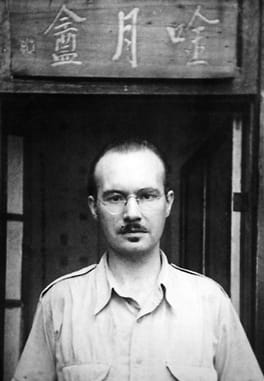
Photo: 中央社記者羅寄梅 / Public domain (source: Wikimedia Commons)
Born on August 9, 1910 in Zutphen, Gelderland, Netherlands, Robert van Gulik was a writer, linguist and diplomat. Robert van Gulik died on September 24, 1967, aged 57. Schooling on record includes Leiden University. Notable works include Van Gulik's Judge Dee series.
My Take
What strikes me about Robert van Gulik is how completely he straddled two worlds. He was a Dutch diplomat and Leiden-trained orientalist, yet he's remembered most for fiction set in imperial China. I love that his Judge Dee mysteries weren't invented from nothing, he borrowed the detective from an 18th-century Chinese novel, so the books feel like a genuine bridge between cultures rather than exotic decoration. The fact that he also played the guqin tells me his interest ran deeper than scholarship. To me he's a reminder that the most lasting work often comes from someone obsessed with a culture not their own.
This take was written by generative AI, one per person, from publicly reported facts (editorial policy). It is a reading of the record, not reporting.
1. Profile
- Name (English)
- Robert van Gulik
- Name (Japanese)
- ロバート・ファン・ヒューリック
- Reading
- ろばーと・ふぁん・ひゅーりっく
- Born
- August 9, 1910 – September 24, 1967
- Origin
- Zutphen, Gelderland, Netherlands
- Occupation
- writer / linguist / diplomat / translator / novelist
- Zodiac / Chinese zodiac
- Leo / Dog
2. Background
- University
- Leiden University
3. Works & records
Filmography / notable works
| Category | Title |
|---|---|
| Notable work | Van Gulik's Judge Dee series |
4. Links
5. About this entry
Tags
- Last updated
Facts are limited to publicly available information up to 2024; non-public or unconfirmed items are omitted. English text is machine-assisted (facts translated by Sonnet, "My Take" written by Opus 4.8). The Japanese page is the source of record.
Frequently asked questions
When was Robert van Gulik born?
Born August 9, 1910.
When did Robert van Gulik die?
Died September 24, 1967, aged 57.
Where was Robert van Gulik from?
Robert van Gulik was from Zutphen, Gelderland, Netherlands.
What did Robert van Gulik do?
Robert van Gulik worked as writer, linguist, diplomat, translator, novelist.
What was Robert van Gulik known for?
Notable works include Van Gulik's Judge Dee series.
Writer — see all → · Linguist — see all → · More people from the Netherlands →