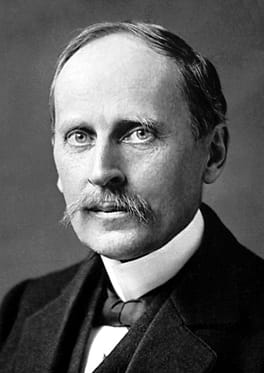
Photo: Unknown author / Public domain (source: Wikimedia Commons)
Romain Rolland, born on January 29, 1866 in Clamecy, Nièvre, France, was a writer, playwright and essayist. Romain Rolland died on December 30, 1944, aged 78. Schooling on record includes University of Paris. Awards on record include Nobel Prize in Literature (1915), Prix Femina (1905) and Grand prix de littérature de l'Académie française (1913). Notable works include Jean-Christophe, Péguy and The life of Toistoi.
My Take
Romain Rolland is the kind of writer who makes you realize how small most ambitions are. Here was a man from a tiny town in Burgundy who decided the world needed a ten-volume novel — Jean-Christophe — about a German composer's entire life, and he actually pulled it off with enough force to win the Nobel Prize in Literature in 1915. But what I find even more striking is that he earned it during World War I, when he was living in Switzerland and writing pamphlets against the very war tearing Europe apart. That took real guts. He wasn't just a pen-pusher; he admired Tolstoy and Gandhi deeply, corresponded with both, and spent his life asking whether an individual conscience could stand against historical madness. The answer, in his case, was yes.
This take was written by generative AI, one per person, from publicly reported facts (editorial policy). It is a reading of the record, not reporting.
1. Profile
- Name (English)
- Romain Rolland
- Name (Japanese)
- ロマン・ロラン
- Reading
- ろまん・ろらん
- Born
- January 29, 1866 – December 30, 1944
- Origin
- Clamecy, Nièvre, France
- Occupation
- writer / playwright / essayist / historian / novelist
- Zodiac / Chinese zodiac
- Aquarius / Tiger
2. Background
- University
- University of Paris
Awards & achievements
- 1915 Nobel Prize in Literature
- 1905 Prix Femina
- 1913 Grand prix de littérature de l'Académie française
3. Works & records
Filmography / notable works
| Category | Title |
|---|---|
| Notable work | Jean-Christophe |
| Notable work | Péguy |
| Notable work | The life of Toistoi |
4. Links
- Wikipedia (English)https://en.wikipedia.org/wiki/Romain%20Rolland
- Wikipedia (Japanese)https://ja.wikipedia.org/wiki/%E3%83%AD%E3%83%9E%E3%83%B3%E3%83%BB%E3%83%AD%E3%83%A9%E3%83%B3
- Wikidatahttps://www.wikidata.org/wiki/Q47162
5. About this entry
Tags
- Last updated
Facts are limited to publicly available information up to 2024; non-public or unconfirmed items are omitted. English text is machine-assisted (facts translated by Sonnet, "My Take" written by Opus 4.8). The Japanese page is the source of record.
Frequently asked questions
When was Romain Rolland born?
Born January 29, 1866.
When did Romain Rolland die?
Died December 30, 1944, aged 78.
Where was Romain Rolland from?
Romain Rolland was from Clamecy, Nièvre, France.
What did Romain Rolland do?
Romain Rolland worked as writer, playwright, essayist, historian, novelist.
What was Romain Rolland known for?
Notable works include Jean-Christophe, Péguy, The life of Toistoi.
Writer — see all → · Playwright — see all → · More people from France →