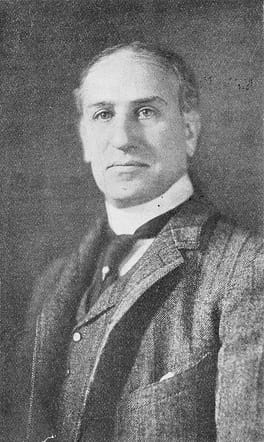
Photo: Pirie MacDonald / Public domain (source: Wikimedia Commons)
My Take
Solomon R. Guggenheim is proof that a fortune is only as interesting as what you do with it. He could have just collected old masters like every other Gilded Age millionaire, but instead, guided by Hilla Rebay, he went all in on Kandinsky and non-objective abstraction when almost nobody took it seriously. The result is one of the most recognizable museums on earth, that spiraling Frank Lloyd Wright shell on Fifth Avenue. I find it remarkable that his name now means avant-garde art rather than copper smelting. That is a legacy reinvented through genuine conviction, and the building alone is worth the trip.
This take was written by generative AI, one per person, from publicly reported facts (editorial policy). It is a reading of the record, not reporting.
Overview
Solomon R. Guggenheim (February 2, 1861 - November 3, 1948) was an American businessman, industrialist and art collector. A member of the wealthy Guggenheim family, which built its fortune in mining and smelting, he turned later in life to collecting modern and abstract art. In 1937 he established the Solomon R. Guggenheim Foundation, which opened the Museum of Non-Objective Painting and later the landmark Frank Lloyd Wright-designed Solomon R. Guggenheim Museum in New York City. He died in 1948.
1. Profile
- Name (English)
- Solomon R. Guggenheim
- Name (Japanese)
- ソロモン・R・グッゲンハイム
- Reading
- そろもん・R・ぐっげんはいむ
- Born
- February 2, 1861 – November 3, 1948
- Origin
- Philadelphia, Pennsylvania, USA
- Occupation
- Art collector / Entrepreneur / Industrialist
- Zodiac / Chinese zodiac
- Aquarius / Rooster
2. Links
3. About this entry
Tags
- Last updated
Facts are limited to publicly available information up to 2024; non-public or unconfirmed items are omitted. English text is machine-assisted (facts translated by Sonnet, "My Take" written by Opus 4.8). The Japanese page is the source of record.
Frequently asked questions
When was Solomon R. Guggenheim born?
Born February 2, 1861.
When did Solomon R. Guggenheim die?
Died November 3, 1948, aged 87.
Where was Solomon R. Guggenheim from?
Solomon R. Guggenheim was from Philadelphia, Pennsylvania, USA.
What did Solomon R. Guggenheim do?
Solomon R. Guggenheim worked as Art collector, Entrepreneur, Industrialist.
Art collector — see all → · Entrepreneur — see all → · More people from USA →