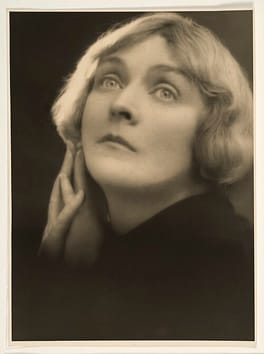
Photo: State Library of New South Wales collection / No restrictions (source: Wikimedia Commons)
Sybil Thorndike was born on October 24, 1882 in Gainsborough, United Kingdom. Sybil Thorndike was credited as a stage actor, film actor and suffragist. Death is recorded on June 9, 1976, at the age of 93. Recorded honors include Dame Commander of the Order of the British Empire (1931), Companion of Honour (1970), honorary degree (1922) and 1 more.
My Take
What moves me about Sybil Thorndike is her reinvention. Trained as a concert pianist, she was forced off that path by a hand injury and turned instead to a stage career that ran from 1904 to 1969, an almost unimaginable span. She became one of Britain's defining actresses while also living as a committed suffragist and pacifist. The titles, Dame and Companion of Honour, matter less to me than the spine behind them. I find her a model of how a closed door can become a wider one, talent and conviction carrying her across more than half a century.
This take was written by generative AI, one per person, from publicly reported facts (editorial policy). It is a reading of the record, not reporting.
1. Profile
- Name (English)
- Sybil Thorndike
- Name (Japanese)
- シビル・ソーンダイク
- Reading
- しびる・そーんだいく
- Born
- October 24, 1882 – June 9, 1976
- Origin
- Gainsborough, United Kingdom
- Occupation
- stage actor / film actor / actor / suffragist / pacifist
- Zodiac / Chinese zodiac
- Scorpio / Horse
2. Background
Awards & achievements
- 1931 Dame Commander of the Order of the British Empire
- 1970 Companion of Honour
- 1922 honorary degree
- 1966 Honorary Doctor of Letters
3. Links
- Wikipedia (English)https://en.wikipedia.org/wiki/Sybil%20Thorndike
- Wikidatahttps://www.wikidata.org/wiki/Q177248
4. About this entry
Tags
- Last updated
Facts are limited to publicly available information up to 2024; non-public or unconfirmed items are omitted. English text is machine-assisted (facts translated by Sonnet, "My Take" written by Opus 4.8). The Japanese page is the source of record.
Frequently asked questions
When was Sybil Thorndike born?
Sybil Thorndike was born on October 24, 1882.
When did Sybil Thorndike die?
Sybil Thorndike died on June 9, 1976, aged 93.
Where was Sybil Thorndike from?
Sybil Thorndike was from Gainsborough, United Kingdom.
What did Sybil Thorndike do?
Sybil Thorndike worked as stage actor, film actor, actor, suffragist, pacifist.
Stage actor — see all → · Film actor — see all → · More people from the United Kingdom → · More people born on October 24 →