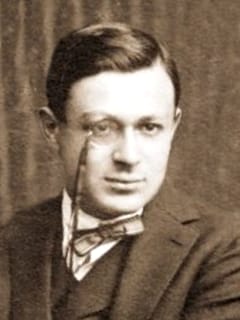
Photo: original author: unknown; cropped and retouched by: Rlevente / CC BY-SA 4.0 (source: Wikimedia Commons)
Tristan Tzara was born in Moinești, Bacău County, Romania on April 16, 1896. Tristan Tzara was credited as an art collector, poet and writer. Death is recorded on December 25, 1963, at the age of 67. Credited works include Handkerchief of Clouds.
My Take
Tristan Tzara fascinates me because he treated chaos as a creative principle. Born Samuel Rosenstock in rural Romania, he became the loud heart of Dada, a movement that gleefully demolished the idea that art must mean anything tidy. Poet, essayist, performance artist, diplomat, filmmaker, his sprawling resume is itself an anti-establishment statement. What I respect most is the courage to embrace accident and provocation when the world expected polish. A century later, every artist who values disruption over decoration owes him a quiet debt. He died on Christmas Day in 1963, unconventional to the very end, and I think he would have liked that detail.
This take was written by generative AI, one per person, from publicly reported facts (editorial policy). It is a reading of the record, not reporting.
1. Profile
- Name (English)
- Tristan Tzara
- Name (Japanese)
- トリスタン・ツァラ
- Reading
- とりすたん・つぁら
- Born
- April 16, 1896 – December 25, 1963
- Origin
- Moinești, Bacău County, Romania
- Occupation
- art collector / poet / writer / diplomat / film director
- Zodiac / Chinese zodiac
- Aries / Monkey
2. Works & records
Filmography / notable works
| Category | Title |
|---|---|
| Notable work | Handkerchief of Clouds |
3. Links
4. About this entry
Tags
- Last updated
Facts are limited to publicly available information up to 2024; non-public or unconfirmed items are omitted. English text is machine-assisted (facts translated by Sonnet, "My Take" written by Opus 4.8). The Japanese page is the source of record.
Frequently asked questions
When was Tristan Tzara born?
Tristan Tzara was born on April 16, 1896.
When did Tristan Tzara die?
Tristan Tzara died on December 25, 1963, aged 67.
Where was Tristan Tzara from?
Tristan Tzara was from Moinești, Bacău County, Romania.
What did Tristan Tzara do?
Tristan Tzara worked as art collector, poet, writer, diplomat, film director.
What was Tristan Tzara known for?
Tristan Tzara's notable works include Handkerchief of Clouds.
Art collector — see all → · Poet — see all → · More people from Romania → · More people born on April 16 →