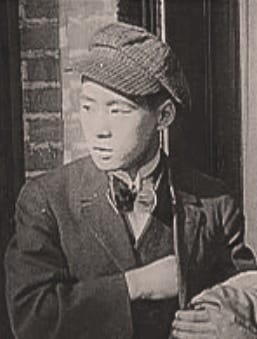
Photo: Unknown author / Public domain (source: Wikimedia Commons)
My Take
Yutaka Abe is one of those figures who makes you stop and do the math: born in 1895 in Miyagi Prefecture, dead in 1977, meaning he was alive for the entire arc of Japanese cinema — from flickering silent reels to color television. That's not a career, that's a ringside seat to history. What I find genuinely fascinating is that he worked both sides of the camera, as an actor and as a director, which is rarer than it sounds and gives a person a completely different feel for what a scene actually needs. Early Showa filmmaking was genuinely uncharted territory, and surviving it — let alone contributing to it — takes a kind of stubborn creative instinct that I have a lot of respect for. He never became a household name outside Japan, but the fact that he kept working through such a turbulent, inventive era says plenty on its own.
This take was written by generative AI, one per person, from publicly reported facts (editorial policy). It is a reading of the record, not reporting.
Overview
Yutaka Abe (February 2, 1895 – January 3, 1977) was a Japanese actor and film director from Miyagi Prefecture. He was active during the formative decades of Japanese cinema, spanning the silent-film era through the postwar period. Working on both sides of the camera, he contributed to the industry both as a performer and as a director.
1. Profile
- Name (English)
- Yutaka Abe
- Name (Japanese)
- 阿部豊
- Reading
- あべ ゆたか
- Born
- February 2, 1895 – January 3, 1977
- Origin
- Miyagi Prefecture, Japan
- Occupation
- Actor / Film Director
- Zodiac / Chinese zodiac
- Aquarius / Goat
2. Links
- Wikipedia (Japanese)https://ja.wikipedia.org/wiki/%E9%98%BF%E9%83%A8%E8%B1%8A
- Wikidatahttps://www.wikidata.org/wiki/Q2750636
3. About this entry
Tags
- Last updated
Only publicly available facts are listed; non-public or unconfirmed items are omitted. Base data was compiled from Wikidata from June 2026 onward; ages are recalculated daily and deaths are checked against Wikidata on an ongoing basis. English text is machine-assisted (facts translated by Sonnet, "My Take" written by Opus 4.8). The Japanese page is the source of record.
Frequently asked questions
When was Yutaka Abe born?
Yutaka Abe was born on February 2, 1895.
When did Yutaka Abe die?
Yutaka Abe died on January 3, 1977, aged 81.
Where was Yutaka Abe from?
Yutaka Abe was from Miyagi Prefecture, Japan.
What did Yutaka Abe do?
Yutaka Abe worked as Actor, Film Director.
Actor — see all → · Film Director — see all → · More people from Japan → · More people born on February 2 →