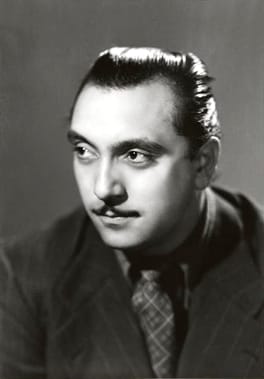
Photo: Studio Harcourt / Public domain (source: Wikimedia Commons)
Public records list Django Reinhardt as a composer, banjoist and jazz musician. Django Reinhardt was born in Pont-à-Celles, Hainaut, Belgium on January 23, 1910. Death is recorded on May 16, 1953, at the age of 43.
My Take
Django Reinhardt sits in the rarest tier of musicians for me. After a fire left two fingers on his fretting hand barely usable, he did not adapt around the limitation so much as transcend it, inventing a guitar language no one had heard. He effectively created Gypsy jazz single-handedly, the first major jazz voice to rise in Europe. More than seventy years after his death in 1953, guitarists still chase his sound and fail. He turned a catastrophic injury into a signature and then into art. When I need a definition of resilience, I just listen to him play.
This take was written by generative AI, one per person, from publicly reported facts (editorial policy). It is a reading of the record, not reporting.
1. Profile
- Name (English)
- Django Reinhardt
- Name (Japanese)
- ジャンゴ・ラインハルト
- Reading
- じゃんご・らいんはると
- Born
- January 23, 1910 – May 16, 1953
- Origin
- Pont-à-Celles, Hainaut, Belgium
- Occupation
- guitarist / composer / banjoist / jazz musician / jazz guitarist
- Zodiac / Chinese zodiac
- Aquarius / Dog
2. Links
- Official sitehttps://www.djangostation.com
- Wikipedia (English)https://en.wikipedia.org/wiki/Django%20Reinhardt
- Wikipedia (Japanese)https://ja.wikipedia.org/wiki/%E3%82%B8%E3%83%A3%E3%83%B3%E3%82%B4%E3%83%BB%E3%83%A9%E3%82%A4%E3%83%B3%E3%83%8F%E3%83%AB%E3%83%88
- Wikidatahttps://www.wikidata.org/wiki/Q44122
3. About this entry
Tags
- Last updated
Facts are limited to publicly available information up to 2024; non-public or unconfirmed items are omitted. English text is machine-assisted (facts translated by Sonnet, "My Take" written by Opus 4.8). The Japanese page is the source of record.
Frequently asked questions
When was Django Reinhardt born?
Django Reinhardt was born on January 23, 1910.
When did Django Reinhardt die?
Django Reinhardt died on May 16, 1953, aged 43.
Where was Django Reinhardt from?
Django Reinhardt was from Pont-à-Celles, Hainaut, Belgium.
What did Django Reinhardt do?
Django Reinhardt worked as guitarist, composer, banjoist, jazz musician, jazz guitarist.
Guitarist — see all → · Composer — see all → · More people from Belgium → · More people born on January 23 →