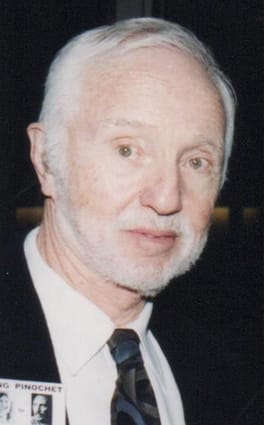
Photo: Institute of Policy Studies / CC BY 2.0 (source: Wikimedia Commons)
Haskell Wexler was a cinematographer, film director and screenwriter, born on February 6, 1922 in Chicago, Illinois, United States. Haskell Wexler died on December 27, 2015, aged 93. Education on record includes Roger C. Sullivan High School and University of California, Berkeley. Recorded honors include Academy Award for Best Cinematography, Black-and-White (1967), Academy Award for Best Cinematography (1977) and star on Hollywood Walk of Fame.
My Take
Haskell Wexler is the kind of name I think deserves more recognition outside film circles. Two Academy Awards for cinematography, for Who's Afraid of Virginia Woolf? and Bound for Glory, plus a star on the Hollywood Walk of Fame, but what draws me in is that he was also a documentarian and a director with a real political conscience. A Chicago kid out of Berkeley who shaped how movies looked for decades. I respect cinematographers because their fingerprints are everywhere yet rarely credited by casual viewers. Wexler lived to 93 and clearly never stopped caring about what the camera was pointed at, which I admire.
This take was written by generative AI, one per person, from publicly reported facts (editorial policy). It is a reading of the record, not reporting.
1. Profile
- Name (English)
- Haskell Wexler
- Name (Japanese)
- ハスケル・ウェクスラー
- Reading
- はすける・うぇくすらー
- Born
- February 6, 1922 – December 27, 2015
- Origin
- Chicago, Illinois, United States
- Occupation
- cinematographer / film director / screenwriter / camera operator / actor
- Zodiac / Chinese zodiac
- Aquarius / Dog
2. Background
- High school
- Roger C. Sullivan High School
- University
- University of California, Berkeley
Awards & achievements
- 1967 Academy Award for Best Cinematography, Black-and-White
- 1977 Academy Award for Best Cinematography
- star on Hollywood Walk of Fame
3. Links
- Official sitehttp://haskellwexler.com/
- Wikipedia (English)https://en.wikipedia.org/wiki/Haskell%20Wexler
- Wikipedia (Japanese)https://ja.wikipedia.org/wiki/%E3%83%8F%E3%82%B9%E3%82%B1%E3%83%AB%E3%83%BB%E3%82%A6%E3%82%A7%E3%82%AF%E3%82%B9%E3%83%A9%E3%83%BC
- Wikidatahttps://www.wikidata.org/wiki/Q1379980
4. About this entry
Tags
- Last updated
Facts are limited to publicly available information up to 2024; non-public or unconfirmed items are omitted. English text is machine-assisted (facts translated by Sonnet, "My Take" written by Opus 4.8). The Japanese page is the source of record.
Frequently asked questions
When was Haskell Wexler born?
Born February 6, 1922.
When did Haskell Wexler die?
Died December 27, 2015, aged 93.
Where was Haskell Wexler from?
Haskell Wexler was from Chicago, Illinois, United States.
What did Haskell Wexler do?
Haskell Wexler worked as cinematographer, film director, screenwriter, camera operator, actor.
Cinematographer — see all → · Film director — see all → · More people from the United States →