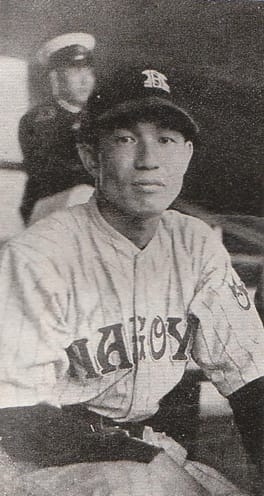
Photo: ベースボール・マガジン社 / Public domain (source: Wikimedia Commons)
My Take
Kaichi Masu is the kind of figure who quietly keeps baseball history honest — born in Kyoto in 1908, he did the rare double shift of playing the game and then stepping back to officiate it. That transition from player to umpire is genuinely fascinating to me; most guys who love the sport want to stay in the spotlight, but there's something admirable about choosing the role where nobody claps for you and everyone argues with you. He lived through the entire formative era of Japanese professional baseball, from its scrappy prewar beginnings right through the postwar boom, and passed away in 1981 — so he basically got a front-row seat (or, well, a spot on the field with a chest protector) for all of it. He also managed Nagoya as a player-manager before the war, yet the umpire years are the part that sticks with me: the game couldn't happen without them, but history tends to forget their names anyway. I find that a little poignant.
This take was written by generative AI, one per person, from publicly reported facts (editorial policy). It is a reading of the record, not reporting.
Overview
Kaichi Masu (March 8, 1908 – December 18, 1981) was a Japanese baseball player and umpire born in Kyoto City, Kyoto Prefecture. An outfielder for Nagoya from 1936 to 1944, he also served as the club's player-manager, and after the war he worked for a time as an umpire before managing the Nippon Kokan company team. He passed away in December 1981.
1. Profile
- Name (English)
- Kaichi Masu
- Name (Japanese)
- 桝嘉一
- Reading
- ます かいち
- Born
- March 8, 1908 – December 18, 1981
- Origin
- Kyoto City, Kyoto Prefecture, Japan
- Height
- 170 cm
- Occupation
- Baseball Player / Baseball Umpire
- Zodiac / Chinese zodiac
- Pisces / Monkey
2. Links
- Wikipedia (Japanese)https://ja.wikipedia.org/wiki/%E6%A1%9D%E5%98%89%E4%B8%80
- Wikidatahttps://www.wikidata.org/wiki/Q11538248
3. About this entry
Tags
- Last updated
Only publicly available facts are listed; non-public or unconfirmed items are omitted. Base data was compiled from Wikidata from June 2026 onward; ages are recalculated daily and deaths are checked against Wikidata on an ongoing basis. English text is machine-assisted (facts translated by Sonnet, "My Take" written by Opus 4.8). The Japanese page is the source of record.
Frequently asked questions
When was Kaichi Masu born?
Kaichi Masu was born on March 8, 1908.
When did Kaichi Masu die?
Kaichi Masu died on December 18, 1981, aged 73.
Where was Kaichi Masu from?
Kaichi Masu was from Kyoto City, Kyoto Prefecture, Japan.
What did Kaichi Masu do?
Kaichi Masu worked as Baseball Player, Baseball Umpire.
How tall was Kaichi Masu?
Kaichi Masu was 170 cm tall.
Baseball Player — see all → · More people from Japan → · More people born on March 8 →