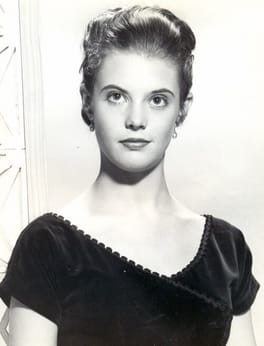
Photo: Warner Bros. / Public domain (source: Wikimedia Commons)
Lois Smith is a television actor, film actor and stage actor, born on November 3, 1930 in Topeka, Kansas, United States. That puts Lois Smith at 95 years old in 2026. Education on record includes University of Washington. Recorded honors include National Society of Film Critics Award for Best Supporting Actress (1970), Drama Desk Award for Outstanding Actress in a Play (2006) and Lucille Lortel Award for Outstanding Lead Actress (2006).
My Take
Lois Smith is the kind of actress who makes you stop mid-scene and think, "wait, who is that?" — and then you spend the next ten minutes looking her up. She made her film debut opposite James Dean in East of Eden back in 1955, which is already a wild credential, and she just never stopped working. Five Easy Pieces, Fried Green Tomatoes, Dead Man Walking, Fatal Attraction — she's quietly threaded through decades of American cinema without ever becoming a household name in the flashy sense, and somehow that makes her more interesting. Her 1970 National Society of Film Critics win for Best Supporting Actress is proof the serious critics always knew. And the fact that she was still picking up Drama Desk and Lucille Lortel awards on Broadway in 2006 — in her mid-seventies — says everything about her range and staying power. A genuine lifer, in the best possible way.
This take was written by generative AI, one per person, from publicly reported facts (editorial policy). It is a reading of the record, not reporting.
1. Profile
- Name (English)
- Lois Smith
- Name (Japanese)
- ロイス・スミス
- Reading
- ろいす・すみす
- Born
- November 3, 1930 (age 95)
- Origin
- Topeka, Kansas, United States
- Occupation
- television actor / film actor / stage actor / actor
- Zodiac / Chinese zodiac
- Scorpio / Horse
2. Background
- University
- University of Washington
Awards & achievements
- 1970 National Society of Film Critics Award for Best Supporting Actress
- 2006 Drama Desk Award for Outstanding Actress in a Play
- 2006 Lucille Lortel Award for Outstanding Lead Actress
3. Links
- Wikipedia (English)https://en.wikipedia.org/wiki/Lois%20Smith
- Wikipedia (Japanese)https://ja.wikipedia.org/wiki/%E3%83%AD%E3%82%A4%E3%82%B9%E3%83%BB%E3%82%B9%E3%83%9F%E3%82%B9
- Wikidatahttps://www.wikidata.org/wiki/Q258246
4. About this entry
Tags
- Last updated
Only publicly available facts are listed; non-public or unconfirmed items are omitted. Base data was compiled from Wikidata from June 2026 onward; ages are recalculated daily and deaths are checked against Wikidata on an ongoing basis. English text is machine-assisted (facts translated by Sonnet, "My Take" written by Opus 4.8). The Japanese page is the source of record.
Frequently asked questions
When was Lois Smith born?
Lois Smith was born on November 3, 1930 and is 95 years old.
Where is Lois Smith from?
Lois Smith is from Topeka, Kansas, United States.
What does Lois Smith do?
Lois Smith works as television actor, film actor, stage actor, actor.
Where did Lois Smith study?
Lois Smith attended University of Washington.
Television actor — see all → · Film actor — see all → · More people from the United States → · More people born on November 3 →