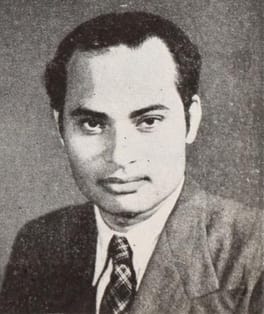
Photo: Filmindia, November 1945 / Public domain (source: Wikimedia Commons)
Sashadhar Mukherjee was listed as a film producer. Born on September 29, 1909, Sashadhar Mukherjee was from Jhansi, Jhansi district, India. Death is recorded on November 3, 1990, at the age of 81. Recorded honors include Padma Shri in arts (1967) and Filmfare Award for Best Film (1956).
My Take
Sashadhar Mukherjee is the sort of figure I love uncovering: the architect behind the camera rather than in front of it. Born in Jhansi in 1909, he moved from Bombay Talkies to co-founding Filmistan Studio in 1943 and later his own Filmalaya. That's not just producing films, that's building the institutions a whole industry runs on. The 1956 Filmfare Best Film award and a 1967 Padma Shri confirm what his career already shows. I admire people who bet on assembling talent and creating platforms, and Mukherjee helped lay the very foundations of Hindi cinema's golden age.
This take was written by generative AI, one per person, from publicly reported facts (editorial policy). It is a reading of the record, not reporting.
1. Profile
- Name (English)
- Sashadhar Mukherjee
- Name (Japanese)
- サシャンダル・ムカルジー
- Reading
- さしゃんだる・むかるじー
- Born
- September 29, 1909 – November 3, 1990
- Origin
- Jhansi, Jhansi district, India
- Occupation
- film producer
- Zodiac / Chinese zodiac
- Libra / Rooster
2. Background
Awards & achievements
- 1967 Padma Shri in arts
- 1956 Filmfare Award for Best Film
3. Links
- Wikipedia (English)https://en.wikipedia.org/wiki/Sashadhar%20Mukherjee
- Wikidatahttps://www.wikidata.org/wiki/Q2277365
4. About this entry
Tags
- Last updated
Facts are limited to publicly available information up to 2024; non-public or unconfirmed items are omitted. English text is machine-assisted (facts translated by Sonnet, "My Take" written by Opus 4.8). The Japanese page is the source of record.
Frequently asked questions
When was Sashadhar Mukherjee born?
Sashadhar Mukherjee was born on September 29, 1909.
When did Sashadhar Mukherjee die?
Sashadhar Mukherjee died on November 3, 1990, aged 81.
Where was Sashadhar Mukherjee from?
Sashadhar Mukherjee was from Jhansi, Jhansi district, India.
What did Sashadhar Mukherjee do?
Sashadhar Mukherjee worked as film producer.
Film producer — see all → · More people from India → · More people born on September 29 →