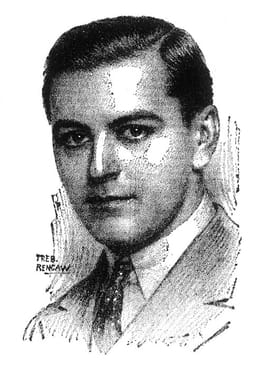
Photo: Treb. Rencaw / Public domain (source: Wikimedia Commons)
Sebastian Shaw was a stage actor, film actor and writer. Sebastian Shaw was born on May 29, 1905 in Norfolk, United Kingdom. Death is recorded on December 23, 1994, at the age of 89. Notable works include Star Wars: Episode VI – Return of the Jedi.
My Take
Here's a name most people don't know but a face — well, a face they absolutely do know. Sebastian Shaw was a consummate British stage actor who spent seven decades honing his craft in theatre, film, and television, writing novels and poetry on the side, because apparently that's just what serious English actors did back then. But the moment that burned him into cinema history came in Return of the Jedi, when Darth Vader's helmet finally comes off and you see the broken, dying man underneath — that was Shaw, in his late seventies, delivering one of the most emotionally loaded reveals in blockbuster history with barely any dialogue. He passed away in 1994 at 89, and I find something quietly beautiful about a Norfolk-born classical actor becoming immortal through science fiction.
This take was written by generative AI, one per person, from publicly reported facts (editorial policy). It is a reading of the record, not reporting.
1. Profile
- Name (English)
- Sebastian Shaw
- Name (Japanese)
- セバスチャン・ショウ
- Reading
- せばすちゃん・しょう
- Born
- May 29, 1905 – December 23, 1994
- Origin
- Norfolk, United Kingdom
- Occupation
- stage actor / film actor / writer / poet / television actor
- Zodiac / Chinese zodiac
- Gemini / Snake
2. Works & records
Filmography / notable works
| Category | Title |
|---|---|
| Notable work | Star Wars: Episode VI – Return of the Jedi |
3. Links
4. About this entry
Tags
- Last updated
Only publicly available facts are listed; non-public or unconfirmed items are omitted. Base data was compiled from Wikidata from June 2026 onward; ages are recalculated daily and deaths are checked against Wikidata on an ongoing basis. English text is machine-assisted (facts translated by Sonnet, "My Take" written by Opus 4.8). The Japanese page is the source of record.
Frequently asked questions
When was Sebastian Shaw born?
Sebastian Shaw was born on May 29, 1905.
When did Sebastian Shaw die?
Sebastian Shaw died on December 23, 1994, aged 89.
Where was Sebastian Shaw from?
Sebastian Shaw was from Norfolk, United Kingdom.
What did Sebastian Shaw do?
Sebastian Shaw worked as stage actor, film actor, writer, poet, television actor.
What was Sebastian Shaw known for?
Sebastian Shaw's notable works include Star Wars: Episode VI – Return of the Jedi.
Stage actor — see all → · Film actor — see all → · More people from the United Kingdom → · More people born on May 29 →