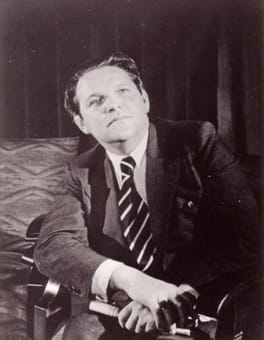
Photo: Unknown author / Public domain (source: Wikimedia Commons)
Born on September 22, 1899, Veit Harlan was from Berlin, Germany. Veit Harlan was credited as a film director, screenwriter and theatre director. Death is recorded on April 13, 1964, at the age of 64.
My Take
Veit Harlan is impossible to discuss without discomfort, and I think that's exactly the point. A Berlin-born director who reached his peak under the Nazi regime, he made the antisemitic propaganda film Jud Süß, a work whose moral weight I refuse to soften. And yet some critics still credit him as a technically capable filmmaker on the strength of pieces like Opfergang, which makes him one of cinema history's most uneasy figures. To me he stands as a stark case of talent severed from conscience, a reminder that the medium's power can serve cruelty as readily as beauty. He is someone we should study rather than look away from.
This take was written by generative AI, one per person, from publicly reported facts (editorial policy). It is a reading of the record, not reporting.
1. Profile
- Name (English)
- Veit Harlan
- Name (Japanese)
- ファイト・ハーラン
- Reading
- ふぁいと・はーらん
- Born
- September 22, 1899 – April 13, 1964
- Origin
- Berlin, Germany
- Occupation
- film director / actor / screenwriter / theatre director / film actor
- Zodiac / Chinese zodiac
- Virgo / Boar
2. Links
- Wikipedia (English)https://en.wikipedia.org/wiki/Veit%20Harlan
- Wikidatahttps://www.wikidata.org/wiki/Q60525
3. About this entry
Tags
- Last updated
Facts are limited to publicly available information up to 2024; non-public or unconfirmed items are omitted. English text is machine-assisted (facts translated by Sonnet, "My Take" written by Opus 4.8). The Japanese page is the source of record.
Frequently asked questions
When was Veit Harlan born?
Veit Harlan was born on September 22, 1899.
When did Veit Harlan die?
Veit Harlan died on April 13, 1964, aged 64.
Where was Veit Harlan from?
Veit Harlan was from Berlin, Germany.
What did Veit Harlan do?
Veit Harlan worked as film director, actor, screenwriter, theatre director, film actor.
Film director — see all → · Actor — see all → · More people from Germany → · More people born on September 22 →