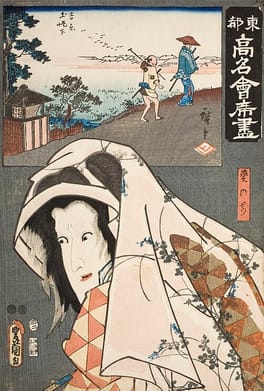
Photo: Utagawa Hiroshige / Utagawa Kunisada / Public domain (source: Wikimedia Commons)
My Take
Ichikawa Monnosuke V — born 1821, deep in the Edo period — is the kind of figure who makes you stop and recalibrate your sense of time. He carried one of kabuki's venerable hereditary names, the fifth in a line of actors who bore that title, and that alone tells you something about the weight on his shoulders. Born to a restaurant family in Ryogoku, he worked his way through several masters and names across Kamigata and the Chugoku region before Ichikawa Danjūrō VII recognized him in 1845. The fact that the name itself survived, passed down across generations, is the story. I find something genuinely moving about a performer from the shogunate era whose existence now lives mostly in the architecture of a title — no social media, no highlight reels, just the echo of a name that people once thought worth keeping.
This take was written by generative AI, one per person, from publicly reported facts (editorial policy). It is a reading of the record, not reporting.
Overview
Ichikawa Monnosuke V was a Japanese kabuki actor born in 1821, during the Edo period. He held the fifth succession of the prestigious Ichikawa Monnosuke stage name, a hereditary title in the kabuki tradition. Born the son of a restaurant owner in Ryogoku, Edo, he trained under several masters under the names Segawa Mitarō, Iwai Kumetarō and Matsumoto Shichizō, and after returning to Edo in 1845 was recognized by Ichikawa Danjūrō VII and took the name Ichikawa Shinsha. He died on September 12, 1878. He is catalogued in Wikidata and the Japanese Wikipedia.
1. Profile
- Name (English)
- Ichikawa Monnosuke V
- Name (Japanese)
- 五代目 市川門之助
- Reading
- ごだいめ いちかわ もんのすけ
- Born
- 1821 – September 12, 1878
- Origin
- Edo (present-day Tokyo), Japan
- Occupation
- Kabuki actor
- Zodiac / Chinese zodiac
- Snake
2. Links
3. About this entry
Tags
- Last updated
Only publicly available facts are listed; non-public or unconfirmed items are omitted. Base data was compiled from Wikidata from June 2026 onward; ages are recalculated daily and deaths are checked against Wikidata on an ongoing basis. English text is machine-assisted (facts translated by Sonnet, "My Take" written by Opus 4.8). The Japanese page is the source of record.
Frequently asked questions
Where was Ichikawa Monnosuke V from?
Ichikawa Monnosuke V was from Edo (present-day Tokyo), Japan.
What did Ichikawa Monnosuke V do?
Ichikawa Monnosuke V worked as Kabuki actor.