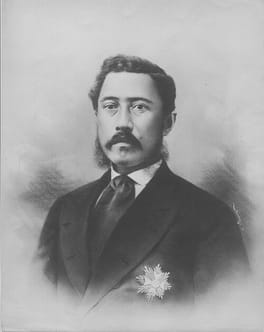
Photo: retouched photograph by J. J. Williams, based on an earlier photo by Menzies Dickson / Public domain (source: Wikimedia Commons)
Public records list Lunalilo as a composer. Lunalilo was born on January 31, 1835 in Honolulu, United States. Death is recorded on February 3, 1874, at the age of 39.
My Take
What strikes me about Lunalilo is how the database flattens a Hawaiian king into a single line: composer. He was the sixth monarch of the Kingdom of Hawaii, elected in 1873 and gone within a year, a grandnephew of Kamehameha I. That he's remembered partly for his music tells me he was more than a political figurehead, but the brevity of his reign, just over a year before his death in 1874 at thirty-nine, leaves me with a sense of unfinished history. I'd love to know which melodies survived him. The royal lineage and the composer's hand together paint someone I wish I knew more about.
This take was written by generative AI, one per person, from publicly reported facts (editorial policy). It is a reading of the record, not reporting.
1. Profile
- Name (English)
- Lunalilo
- Name (Japanese)
- ルナリロ
- Reading
- るなりろ
- Born
- January 31, 1835 – February 3, 1874
- Origin
- Honolulu, United States
- Occupation
- composer
- Zodiac / Chinese zodiac
- Aquarius / Goat
2. Links
- Wikipedia (English)https://en.wikipedia.org/wiki/Lunalilo
- Wikipedia (Japanese)https://ja.wikipedia.org/wiki/%E3%83%AB%E3%83%8A%E3%83%AA%E3%83%AD
- Wikidatahttps://www.wikidata.org/wiki/Q499103
3. About this entry
Tags
- Last updated
Facts are limited to publicly available information up to 2024; non-public or unconfirmed items are omitted. English text is machine-assisted (facts translated by Sonnet, "My Take" written by Opus 4.8). The Japanese page is the source of record.
Frequently asked questions
When was Lunalilo born?
Born January 31, 1835.
When did Lunalilo die?
Died February 3, 1874, aged 39.
Where was Lunalilo from?
Lunalilo was from Honolulu, United States.
What did Lunalilo do?
Lunalilo worked as composer.