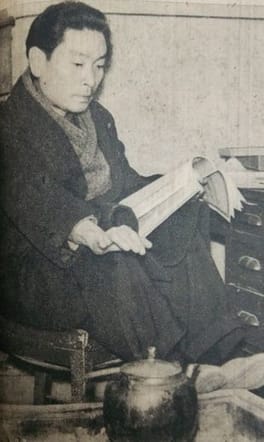
Photo: 朝日新聞社 / Public domain (source: Wikimedia Commons)
My Take
Born in Hokkaido in 1905 and trained at Musashino Academia Musicae, Tadashi Manjome belongs to a generation of Japanese composers I genuinely admire from a distance — people who built careers without a stable medium to build them in. Radio gave way to film scores, film gave way to TV, and through all of it composers like him had to keep reinventing what music even meant to the audience. I like to think the Hokkaido upbringing left something in his sensibility — that northern cold and quiet tends to push composers either toward stark simplicity or something almost stubbornly lush, and either way it's interesting. He passed in 1968 at 63, which feels too soon, right as Japanese popular culture was about to explode globally. Whatever he left behind, the grounding he got at Musashino and the era he navigated make him worth knowing.
This take was written by generative AI, one per person, from publicly reported facts (editorial policy). It is a reading of the record, not reporting.
Overview
Tadashi Manjōme (1905–1968) was a Japanese composer born in Hokkaido. He studied music at Musashino Academia Musicae in Tokyo. He was active during a transformative era in Japanese music that spanned the rise of radio, film, and television. He passed away on April 25, 1968, at the age of 63.
1. Profile
- Name (English)
- Tadashi Manjōme
- Name (Japanese)
- 万城目正
- Reading
- まんじょうめ ただし
- Born
- January 31, 1905 – April 25, 1968
- Origin
- Hokkaido, Japan
- Occupation
- Composer
- Zodiac / Chinese zodiac
- Aquarius / Snake
2. Background
- University
- Musashino Academia Musicae
3. Links
- Wikipedia (Japanese)https://ja.wikipedia.org/wiki/%E4%B8%87%E5%9F%8E%E7%9B%AE%E6%AD%A3
- Wikidatahttps://www.wikidata.org/wiki/Q10864920
4. About this entry
Tags
- Last updated
Only publicly available facts are listed; non-public or unconfirmed items are omitted. Base data was compiled from Wikidata from June 2026 onward; ages are recalculated daily and deaths are checked against Wikidata on an ongoing basis. English text is machine-assisted (facts translated by Sonnet, "My Take" written by Opus 4.8). The Japanese page is the source of record.
Frequently asked questions
When was Tadashi Manjōme born?
Tadashi Manjōme was born on January 31, 1905.
When did Tadashi Manjōme die?
Tadashi Manjōme died on April 25, 1968, aged 63.
Where was Tadashi Manjōme from?
Tadashi Manjōme was from Hokkaido, Japan.
What did Tadashi Manjōme do?
Tadashi Manjōme worked as Composer.
Composer — see all → · More people from Japan → · More people born on January 31 →