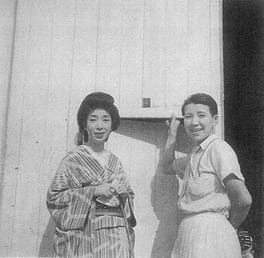
Photo: Daiichi Eiga / Public domain (source: Wikimedia Commons)
My Take
Tazuko Sakane is the kind of person who makes you stop and do a double-take at the history books. Born in Kyoto in 1904, she stepped into Japan's film industry not just as a film editor but as a director — in the 1930s, when the idea of a woman calling the shots on a movie set was practically unthinkable anywhere in the world, let alone in a country where gender roles were carved in stone. She worked her way through the technical craft of editing first, which tells me she understood cinema from the inside out, not just the glamour of the director's chair. Her 1936 debut New Clothing (Hatsu Sugata) is known as the first Japanese feature film directed by a woman, after years of assisting and editing for Kenji Mizoguchi, and honestly, the fact that she did this at all is the story. She lived to 70, and I'd like to think the generations of Japanese women filmmakers who came after her owe her more than they probably know.
This take was written by generative AI, one per person, from publicly reported facts (editorial policy). It is a reading of the record, not reporting.
Overview
Tazuko Sakane (1904–1975) was a Japanese film director and film editor born in Kyoto City, Kyoto Prefecture. Active during an era when women in Japan's film industry were exceptionally rare, she worked in both directing and editing, making her a pioneering figure in Japanese cinema. She passed away on September 2, 1975, at the age of 70.
1. Profile
- Name (English)
- Tazuko Sakane
- Name (Japanese)
- 坂根田鶴子
- Reading
- さかね たづこ
- Born
- December 7, 1904 – September 2, 1975
- Origin
- Kyoto City, Kyoto Prefecture, Japan
- Occupation
- Film director / Film editor
- Zodiac / Chinese zodiac
- Sagittarius / Dragon
2. Links
3. About this entry
Tags
- Last updated
Only publicly available facts are listed; non-public or unconfirmed items are omitted. Base data was compiled from Wikidata from June 2026 onward; ages are recalculated daily and deaths are checked against Wikidata on an ongoing basis. English text is machine-assisted (facts translated by Sonnet, "My Take" written by Opus 4.8). The Japanese page is the source of record.
Frequently asked questions
When was Tazuko Sakane born?
Tazuko Sakane was born on December 7, 1904.
When did Tazuko Sakane die?
Tazuko Sakane died on September 2, 1975, aged 70.
Where was Tazuko Sakane from?
Tazuko Sakane was from Kyoto City, Kyoto Prefecture, Japan.
What did Tazuko Sakane do?
Tazuko Sakane worked as Film director, Film editor.
Film director — see all → · Film editor — see all → · More people from Japan → · More people born on December 7 →